

Industrial Tank Cleaning
High-pressure robotic cleaning for process and industrial vessels.
Reactors, mixers and industrial process vessels pick up residue, scale, polymer films and precipitated salts with every campaign. Left in place, that build-up reduces effective volume, slows heat transfer and contaminates the next batch — while hiding corrosion on the shell and floor. The S6 tank cleaning robot enters through the manway on its 60 m cable and removes residue with up to 200-bar jetting from a 360° rotating nozzle with 45° lift, guided by three HD cameras and 4×3W LEDs. Crews stay outside the vessel, cutting confined-space risk and compressing days of manual scraping into a single maintenance window. Verified for non-flammable and non-explosive tank materials; every job begins with a short application review.
Why Manual Cleaning Fails.
Manual entry cleaning of these tanks carries real, compounding costs.
Confined-Space Risk
Most process vessels are permit-required confined spaces. Entry means gas testing, permits, PPE, scaffolding and a standing rescue plan — and any one of those can stall the job for a day.
Days of Downtime
Manual scraping and scaffolding keep vessels offline for days, delaying production schedules and pushing cleaning into ever-tighter maintenance windows.
Inconsistent Results
Hand cleaning misses corners, welds and baffles. Residue left there contaminates the next batch and quietly undoes the effort.
Hidden Damage
Build-up masks shell and floor corrosion until it becomes a repair problem rather than a cleaning problem.
Why Process Vessels Need Regular Cleaning
Reactors, mixers, storage vessels and other process equipment accumulate product build-up with every campaign — polymer films, precipitated salts, scale and dried residues that a simple flush cannot always reach. Left in place, this layer reduces effective volume, slows heat transfer through the shell, and sheds contamination into the next batch. It also hides shell and floor corrosion until the problem surfaces as an unexpected repair rather than a planned one.
The Cost of Manual Entry Cleaning
Most process tanks are permit-required confined spaces. Cleaning them conventionally means gas testing, entry permits, PPE, scaffolding, a rescue plan and a trained crew standing by — preparation that can take as long as the cleaning itself. Manual scraping is slow in the best case, and in corners, welds and baffles it is inconsistent: residue left behind contaminates the next run and undoes much of the effort.
How the S6 Cleans a Process Vessel
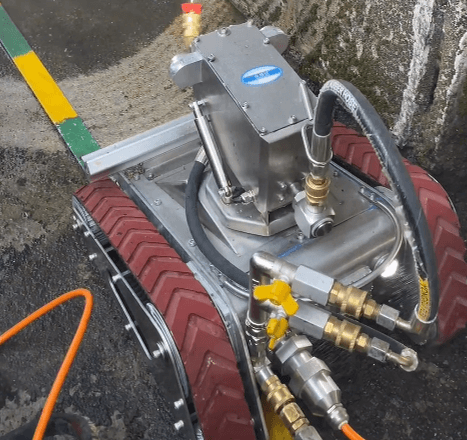
The S6 is lowered or driven through the manway on its 60 m cable and navigates the vessel from a single remote operator. Its 360° rotating nozzle — with 45° up/down lift — blasts residue off walls, floor, corners, welds and baffles at up to 200 bar, adjustable to protect sensitive surfaces. Three HD cameras with 4×3W LEDs give the operator a real-time view from outside the tank, so every surface is covered before the vessel is handed back.
What That Means for Your Maintenance Window
Because the crew stays out of the vessel, confined-space preparation shrinks dramatically, and cleaning runs continuously instead of in fits and starts around entry rotations. Vessels that took days with scaffolding and scraping are typically cleaned in a fraction of the time, letting you fit cleaning into scheduled maintenance windows instead of emergency shutdowns.
Built for Industrial Conditions
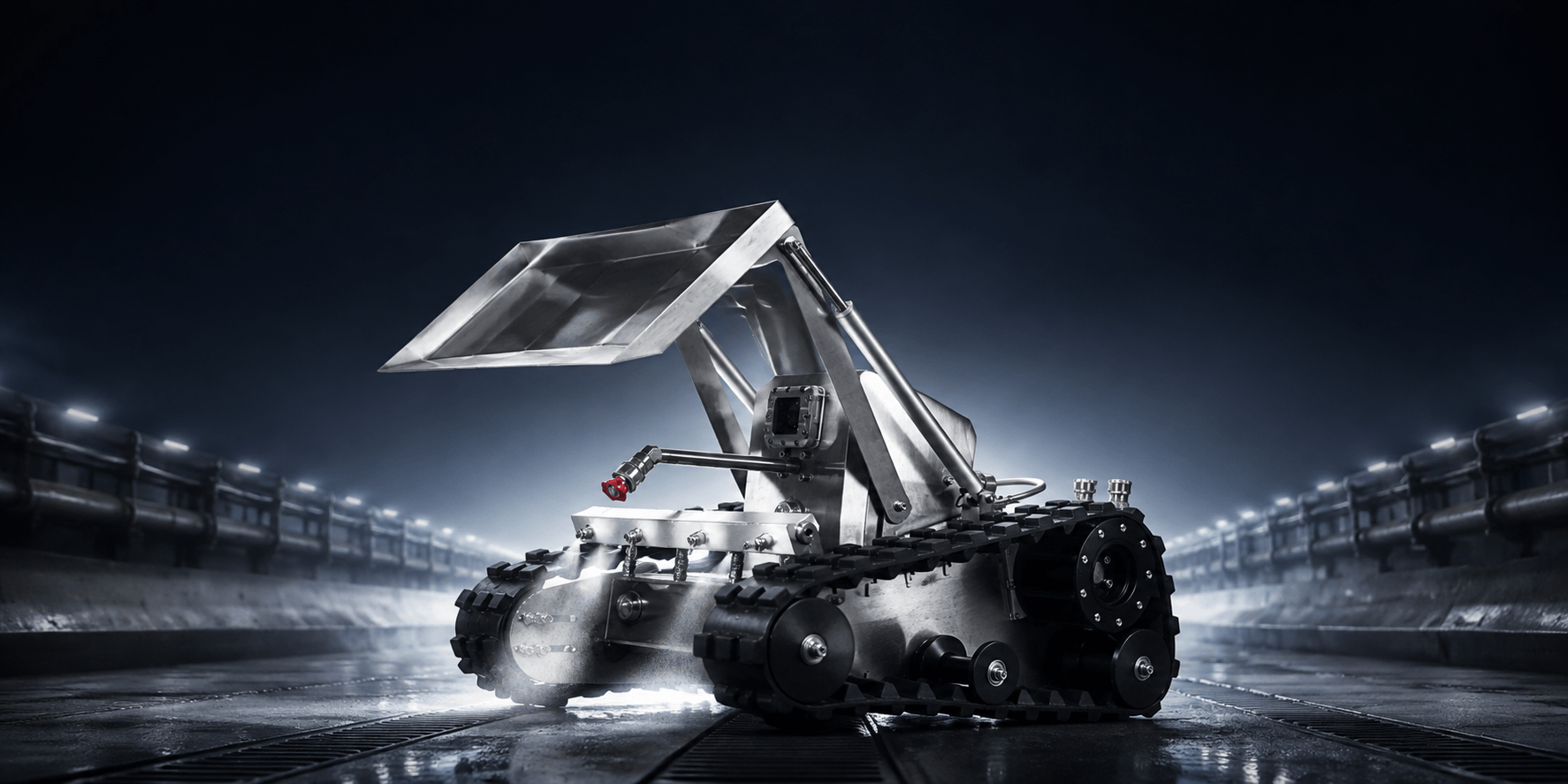
The S6 is built around a 304/316L stainless frame, is sealed to IP66 for washdown environments, and runs on a tracked chassis that climbs across uneven floors and over settled deposits. Pressure and flow are adjustable per job, so the same robot can switch from gentle film removal to heavy scale breakdown as the application requires.
Application Review: What We Need From You
The S6 is verified for non-flammable and non-explosive tank materials and residues only. Before any recommendation we review the vessel material, contents, atmosphere and access points to confirm suitability. Tell us what you are cleaning and our engineers will assess it — usually within a working day.
The S6 Cleans It — No Entry Needed.
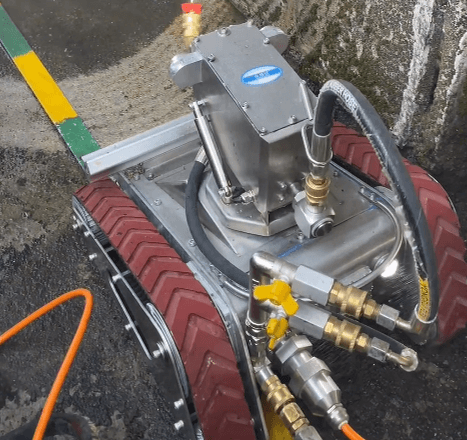
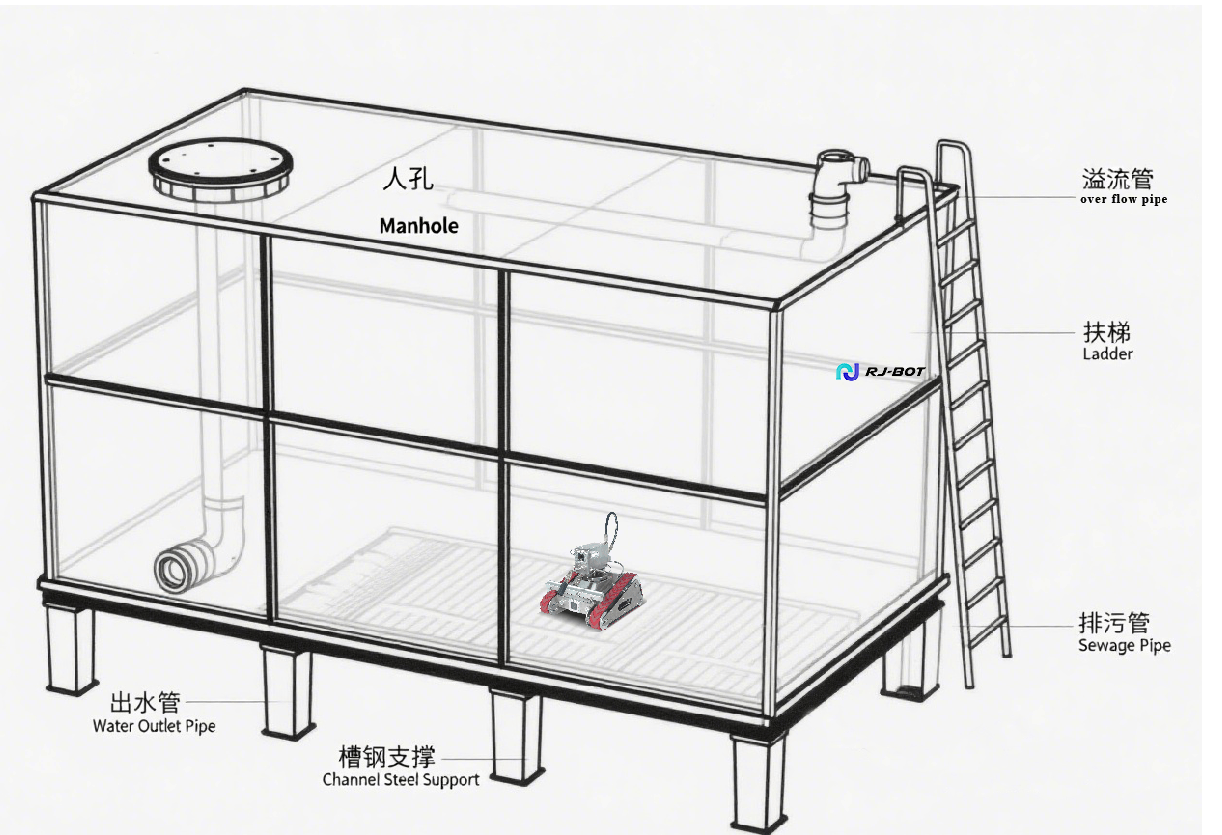
The S6 crawls into the vessel through the manway and blasts residue away at up to 200 bar. Operators watch three HD camera feeds from outside and drive the robot remotely — so in suitable applications the tank is cleaned with nobody inside. A 360° rotating nozzle with 45° up/down lift reaches corners, welds and baffles that scrapers miss, and the 60 m cable lets the robot work deep inside the vessel while the operator stays safely outside. Pressure is adjustable per job, protecting sensitive linings while still removing heavy build-up.
What the S6 Brings to This Job.
The same robot, tuned to your industry — no entry, full coverage, verified results.
No Confined Entry
Crews stay outside the vessel. The S6 does the dirty work, removing the biggest safety exposure and most of the permit overhead from the job.
Full Surface Coverage
A 360° rotating nozzle with 45° up/down lifting reaches corners, welds and baffles that manual methods routinely miss.
Faster Turnaround
Set up in minutes through the manway and clean continuously — cutting most vessels from days of scraping to a single scheduled window.
Material Safe
A 304/316L stainless build and adjustable pressure suit most process and industrial vessel materials and linings.
Verified Results
Three HD cameras and 4×3W LEDs let the operator confirm coverage before the vessel is handed back to production.
From Inspection to Verified Clean.
A proven four-step process that turns a hazardous cleaning job into a routine remote operation.
Inspect
Engineers review the vessel material, access points, residue type and atmosphere, then set the S6 pressure, flow and coverage targets before deployment.
Deploy
The S6 enters through the manway on its 60 m cable, with live HD camera feeds confirmed for the operator before cleaning starts.
Clean
Remote control drives the rotating 360° nozzle across every surface — walls, floor, corners, welds and baffles — until coverage targets are met.
Verify
Camera inspection confirms cleanliness against the plan, and the vessel is documented and handed back for production.
S6 Tank Cleaning Robot.
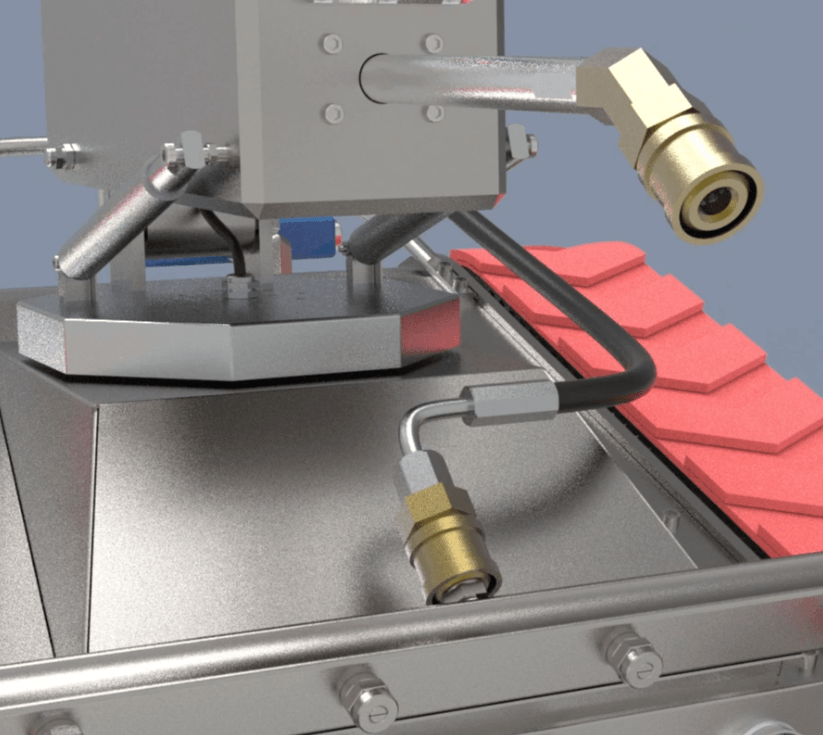
A tracked, remote-controlled high-pressure tank cleaning robot with 360° nozzle coverage, three HD cameras and IP66 rating — engineered for the environments above.
Explore Other Industries.
Clean Your Tanks Remotely.
No Entry Required.
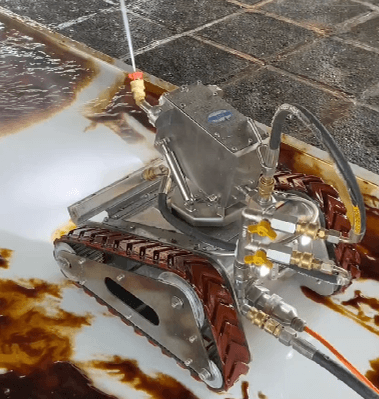
Tell us about your tanks — size, contents and access — and we'll recommend the right S6 setup for your operation.
S6 is built for non-flammable, non-explosive tank environments. Always confirm material and safety conditions with our engineers.