Oil Storage Tanks
Remove sludge and deposits from crude and fuel storage tanks.
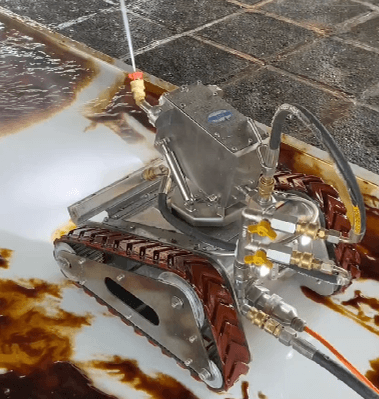
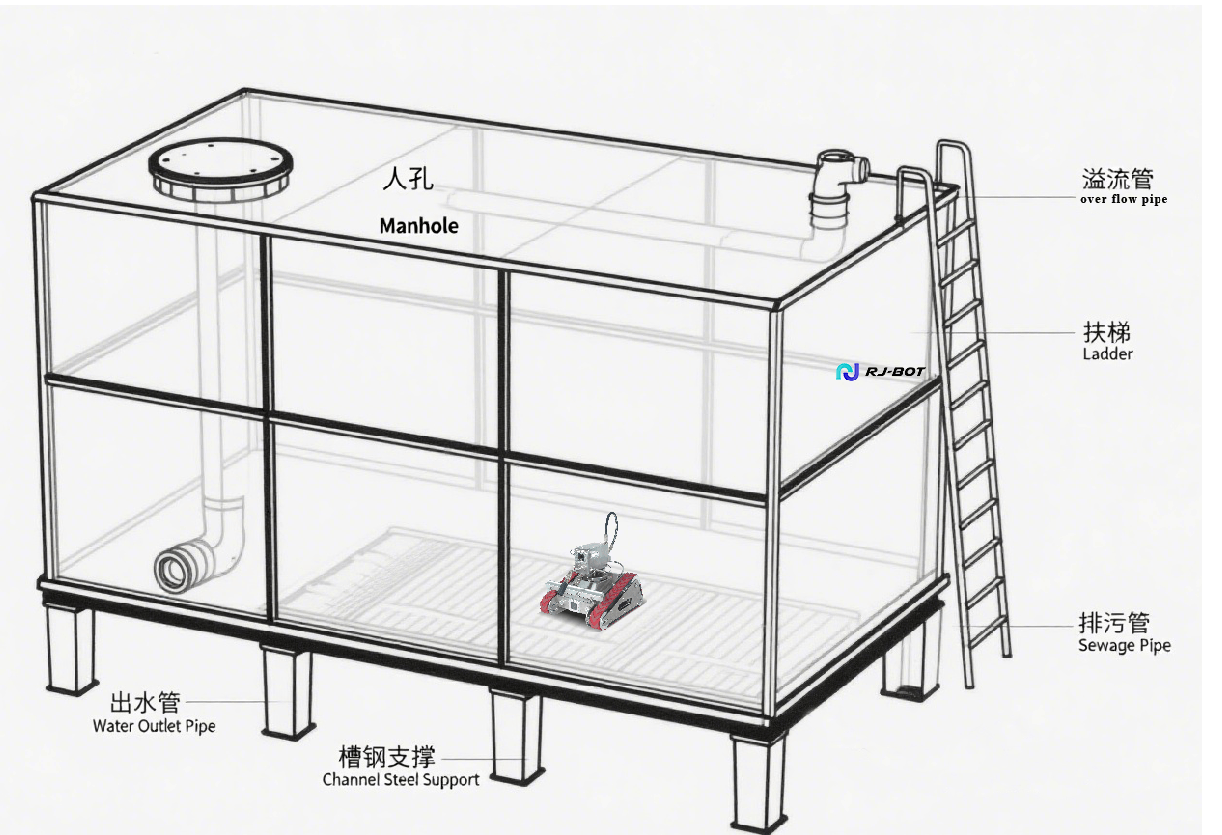
Crude and fuel storage tanks accumulate tank-bottom sludge, wax, asphaltenes and sediment over months of service — material that shrinks usable capacity, distorts gauging and accelerates floor corrosion. The S6 tank cleaning robot enters through the manway or hatch and breaks down these deposits with up to 200-bar jetting, driving across settled material on its tracked chassis with 30° gradeability. Operators monitor the floor on live camera feeds from outside, and broken sludge is pushed toward the sump for external removal. Cleaning happens without gas-freeing the tank in suitable applications, recovering capacity and supporting inspection windows. Verified for non-flammable and non-explosive contents; flammable atmospheres require a separate engineering and certification review.
Safety boundaries apply.
- The S6 is not explosion-proof and carries no ATEX / Ex certification.
- Current application scope covers non-flammable and non-explosive tank materials and residues only.
- Flammable, explosive or hazardous atmospheres require project-specific engineering and certification review before any use.
- For chemical tanks, compatibility must be assessed for each chemical, concentration and temperature before cleaning.
Tell us your tank material, contents and atmosphere conditions — our engineers will assess suitability before making any recommendation.
The Cost of a Dirty Tank Floor.
Manual entry cleaning of these tanks carries real, compounding costs.
Lost Capacity
Sludge, wax and sediment accumulate on the tank floor, quietly shrinking usable storage volume and cutting into the capacity you are paying to maintain.
Costly Shutdown
Gas-freeing, permits and confined-space crews keep the tank offline for days or weeks — and inspections only stretch the downtime further.
Deferred Work
Expensive manual cleanings keep getting postponed until the problem becomes urgent — and more expensive to fix.
Corrosion Hidden Below
Deposits trap moisture and aggressive compounds against the floor steel, accelerating corrosion that only surfaces as a leak or repair.
What Collects at the Bottom of a Storage Tank
Crude and fuel storage tanks are never emptied completely clean. Over months of service, wax, asphaltenes, salts and solids settle on the floor; water and sediment form a separate layer; and the mix can react with tank steel to form dense scale. The result is a sludge layer that shrinks working capacity, distorts gauging and accelerates floor corrosion underneath.
Why Manual Cleaning Gets Postponed
Cleaning a storage tank traditionally means taking it out of service, gas-freeing it, and sending crews in under confined-space rules. That is days or weeks of downtime, plus the cost of the crew, the gas testing and the permits — which is why the job usually gets pushed to the bottom of the maintenance list until the tank is forced offline anyway.
How the S6 Cleans the Floor Remotely
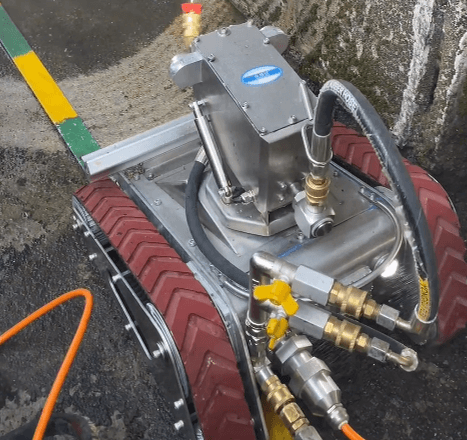
The S6 enters through the manway or hatch and uses up to 200-bar jetting to break up sludge and sediment on the floor. Its tracked chassis — with 30° gradeability — climbs over settled deposits rather than around them, and operators watch three HD camera feeds from outside. Broken material is pushed toward the sump; the S6 has no integrated suction, so external suction or pumping follows engineering confirmation at your site.
Recovering Capacity and Inspection Windows
Removing the sludge layer restores working volume, so gauging reads true and the tank holds what it should. A camera-documented clean also supports inspection windows and turnaround planning — you know the floor state, not just that someone has been inside.
Working With Your Terminal Schedule
Because there is no entry preparation in suitable applications, the S6 can work within shorter out-of-service windows and around your loading schedule. Set-up through existing access points means no cutting, no scaffolding and no extra tank modifications.
Application Review for Storage Tanks
The S6 is verified for non-flammable and non-explosive tank contents. Petroleum environments with volatile fuels or flammable atmospheres require a separate engineering and certification review before any use — our engineers will assess your tank material, contents and atmosphere conditions first.
The S6 Recovers It — Remotely.
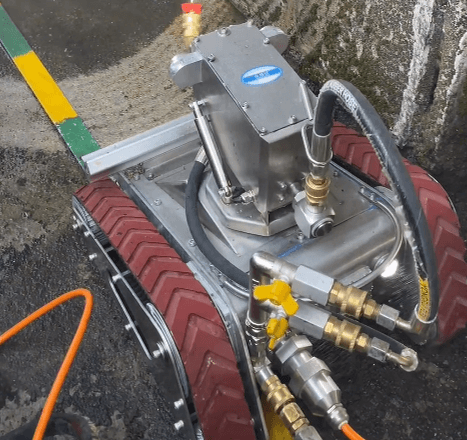
The S6 drives into the tank and uses up to 200-bar jetting to break up sludge and sediment on the floor. Its tracked chassis with 30° gradeability climbs over settled deposits, and operators monitor progress on live camera feeds without entering the tank. Waste is pushed toward the sump for external suction or pumping. Because the crew stays outside, the tank can be cleaned in a shorter window, and every cleaned pass is documented on camera — giving you a verified floor state for inspection and turnaround planning.
What the S6 Brings to This Job.
The same robot, tuned to your industry — no entry, full coverage, verified results.
Recover Capacity
Break down tank-bottom sludge and restore working volume without bringing the tank offline for an entry cleaning.
No Tank Entry
The S6 enters through existing access points — reducing the need for gas-freeing and confined-space crews in suitable applications.
Built for Sludge
A tracked chassis with 30° gradeability drives through settled sediment rather than stopping at its edge.
Live Verification
Three HD cameras show the floor state in real time, so cleaning targets are met before sign-off.
Push-to-Sump Jetting
Direct 200-bar jetting flushes broken material toward the sump, concentrating waste for external removal.
From Inspection to Verified Clean.
A proven four-step process that turns a hazardous cleaning job into a routine remote operation.
Inspect
Survey the tank floor, sludge depth and access points, then plan the cleaning path, pressure and target coverage.
Deploy
Lower the S6 through the manway or hatch with its 60 m cable and confirm camera feeds before starting.
Clean
Jet the floor in passes, pushing broken sludge to the sump while cameras verify coverage across the full floor.
Verify
Inspect the cleaned floor on camera and hand the tank back with documented results for your records.
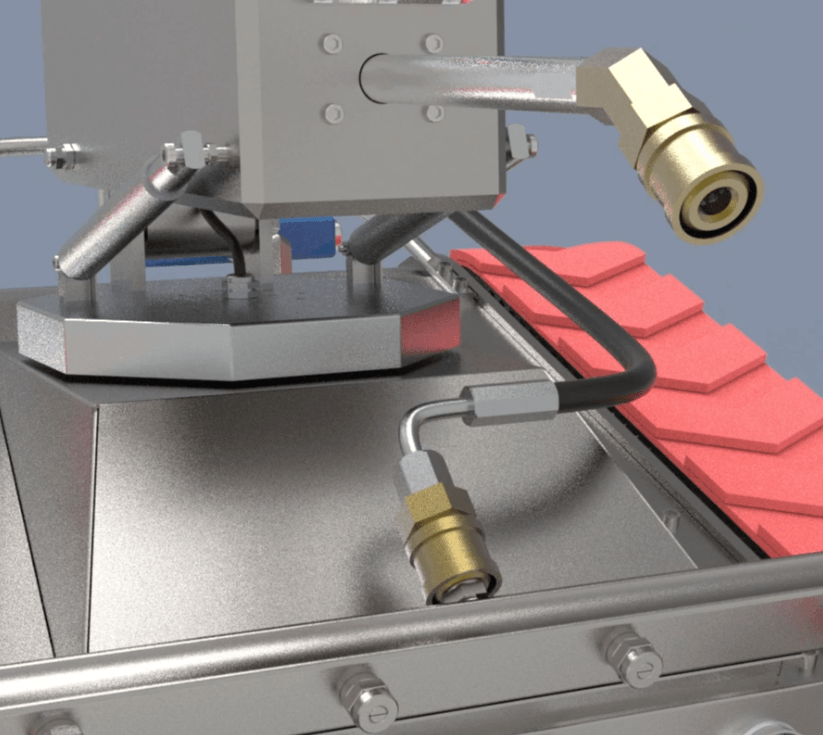
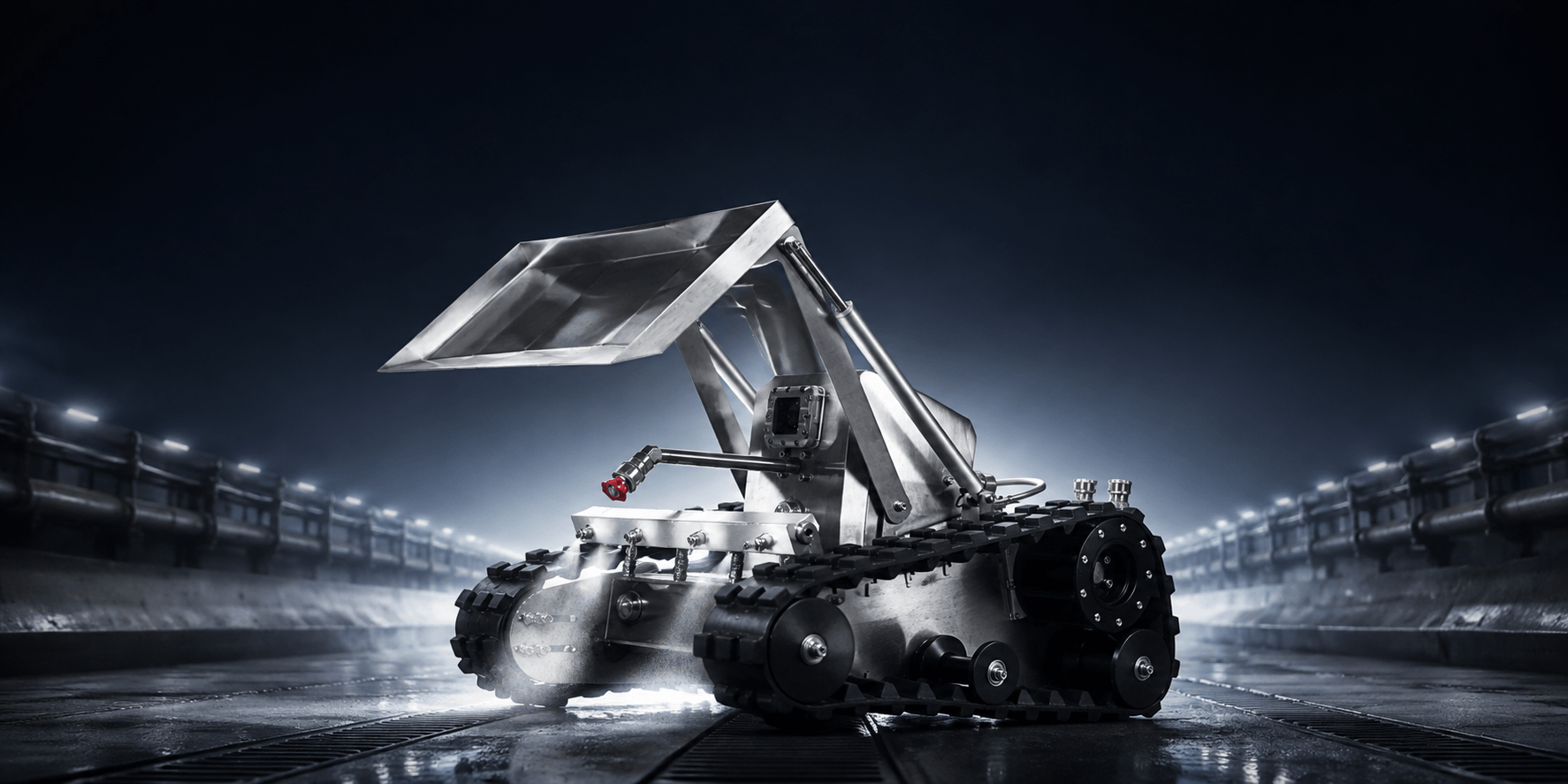
S6 Tank Cleaning Robot.
A tracked, remote-controlled high-pressure tank cleaning robot with 360° nozzle coverage, three HD cameras and IP66 rating — engineered for the environments above.
Explore Other Industries.
Clean Your Tanks Remotely.
No Entry Required.
Tell us about your tanks — size, contents and access — and we'll recommend the right S6 setup for your operation.
S6 is built for non-flammable, non-explosive tank environments. Always confirm material and safety conditions with our engineers.