Sludge & Sediment Removal
Break down heavy sediment on tank bottoms with 200-bar jetting.
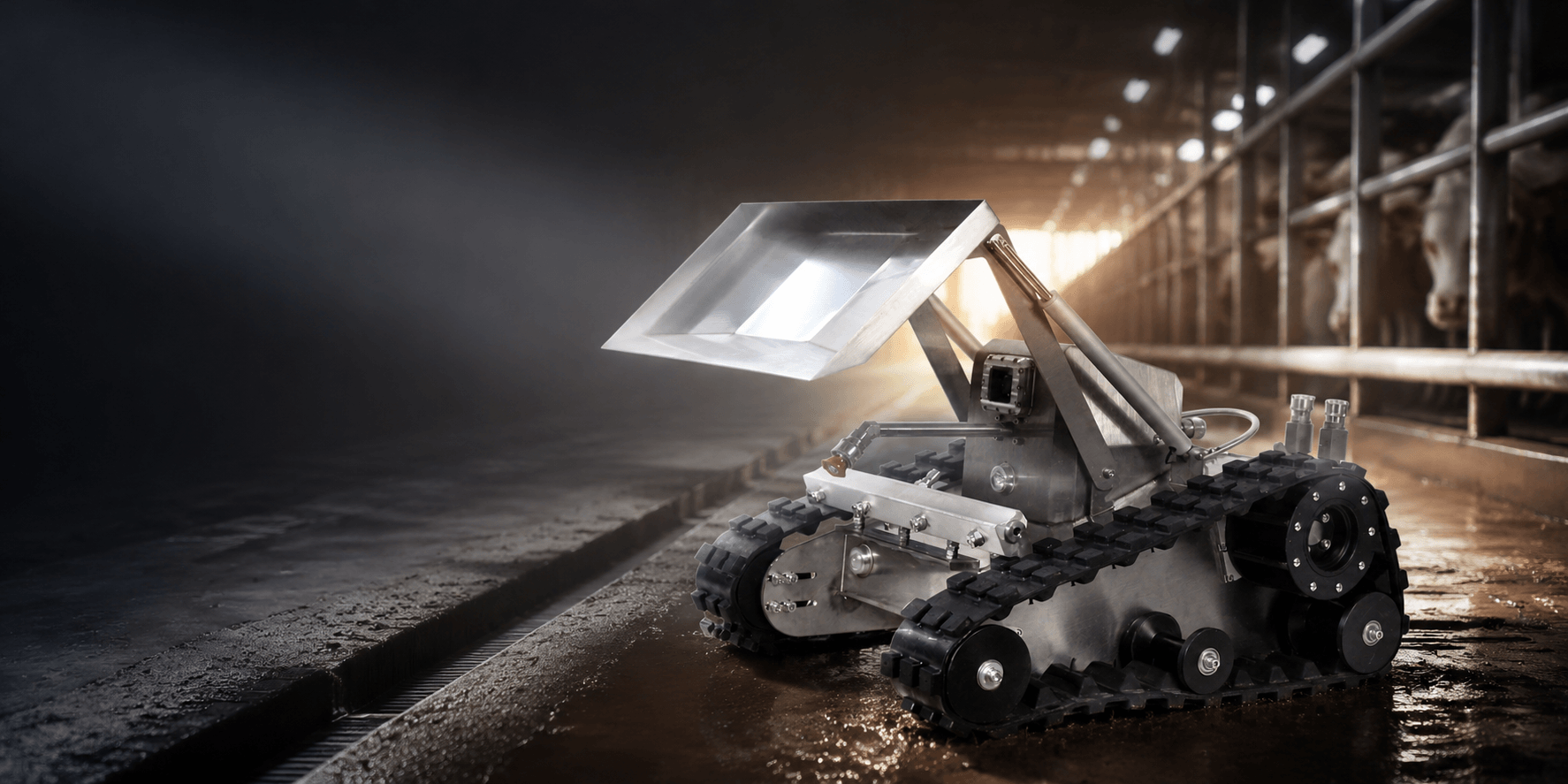
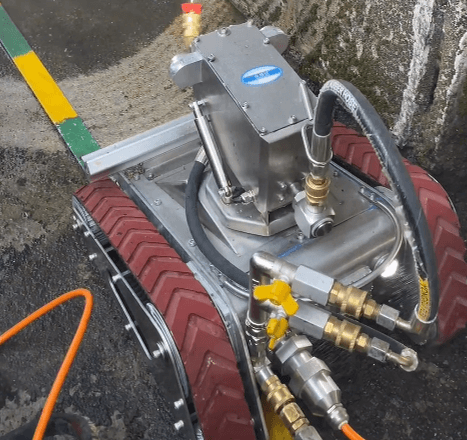
Heavy sludge and sediment on tank floors are the hardest residue to remove — dense, compacted material that resists manual lances and clogs hoses. The S6 tank cleaning robot drives directly into settled deposits, its tracked chassis climbing up to 30°, and breaks the layer apart with up to 200-bar jetting, pushing material toward the sump for external removal. Operators stay outside, watching the floor clear on three HD camera feeds until coverage is confirmed. The S6 cleans and loosens sludge with high-pressure jetting; it does not integrate suction, so external pumping follows engineering confirmation at your site. Verified for non-flammable and non-explosive contents.
The Hardest Residue on the Floor.
Manual entry cleaning of these tanks carries real, compounding costs.
Heavy Sediment
Dense, compacted sludge is a mixture of solids, water and organics that resists manual lances and clogs hoses.
Capacity Loss
Settled material steadily steals working volume on the tank floor.
Dangerous Work
Digging it out by hand means crews knee-deep in hazardous material under confined-space rules.
Deferred Until Urgent
Expensive manual removal gets postponed until the deposit is deeper and the tank is needed sooner.
What Heavy Sludge Really Is
Tank-bottom sludge is a mixture of solids, water and organics — wax and asphaltenes in fuel tanks, precipitated salts and scale in process tanks, settled sediment in basins. It is dense, compacted and uneven, and it steadily shrinks working volume while accelerating floor corrosion underneath.
Why Manual Removal Gets Deferred
Removing it has traditionally meant crews in the tank with shovels, hoses and scrapers under confined-space rules — slow, hazardous work that often gets deferred until it becomes urgent. By then the deposit is deeper, the tank is needed sooner, and the job costs more.
How the S6 Drives Onto the Deposit
The S6 drives directly onto the sludge. Its tracked chassis climbs up to 30° over settled material, so it works through the deposit instead of around its edges, and up to 200-bar jetting breaks the layer apart, flushing it toward the sump. Operators watch on three HD cameras from outside the tank.
Breaking It Down, Moving It Out
Jet after jet fractures the compacted layer into manageable material that flows toward the sump for external suction or pumping. The S6 cleans and loosens sludge with high-pressure jetting; it does not integrate sludge suction, so external removal follows engineering confirmation at your site.
Confirming the Floor Is Clear
Coverage is verified live on camera before sign-off — no more guessing whether a patch of floor is clean or just looks clean from the manway. The final camera record documents the floor state for your files.
Application Review
The S6 is verified for non-flammable and non-explosive tank contents. Sludge classification and disposal should follow your local requirements, and our engineers will confirm suitability for your tank material, contents and atmosphere before any recommendation.
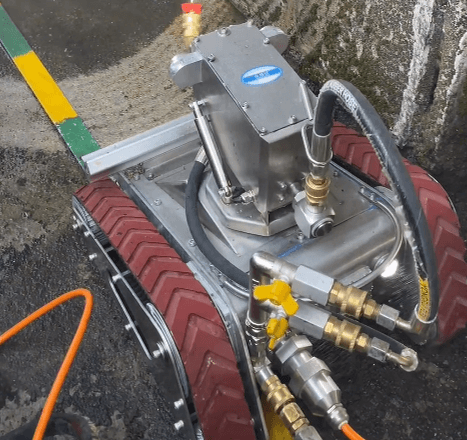
The S6 Drives Onto It — And Breaks It Apart.
The S6 drives onto the sludge itself — its tracked chassis climbs up to 30° — and breaks the layer apart with up to 200-bar jetting, pushing material toward the sump. Operators stay outside, watching the floor clear on live cameras. High-pressure jetting fractures compacted deposits into material that can be pumped or suctioned away externally, and camera verification confirms the floor is clear before sign-off.
What the S6 Brings to This Job.
The same robot, tuned to your industry — no entry, full coverage, verified results.
200-bar Jetting
High-pressure jets break dense, compacted sludge into manageable material.
Drives on Sludge
A tracked chassis with 30° gradeability moves through settled sediment, not around it.
Push to Sump
Direct jetting flushes broken sludge toward the sump for external removal.
Nobody Inside
The S6 does the heavy work while crews stay out of the hazardous environment.
Verified Floor
Live camera coverage confirms the floor is clear before sign-off.
From Inspection to Verified Clean.
A proven four-step process that turns a hazardous cleaning job into a routine remote operation.
Survey
Assess sludge depth and distribution on the tank floor to plan the pass pattern and pressure.
Deploy
Insert the S6 through the access point and confirm cameras and jets before starting.
Break Up
Jet heavy deposits in passes, driving into the sludge to break and push it toward the sump.
Confirm
Camera-verify the floor is clear and record the final state for sign-off.
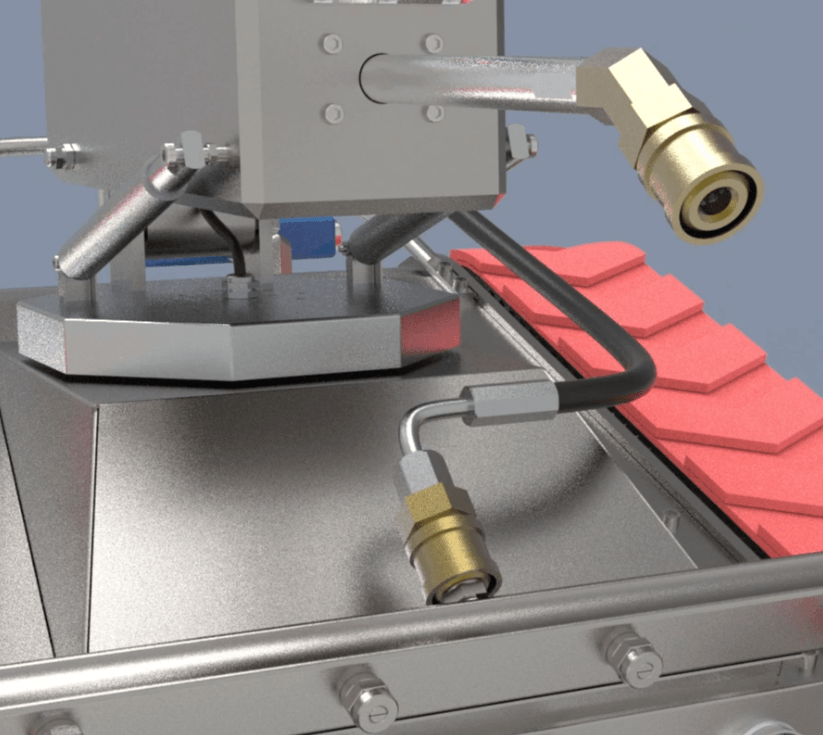
S6 Tank Cleaning Robot.
A tracked, remote-controlled high-pressure tank cleaning robot with 360° nozzle coverage, three HD cameras and IP66 rating — engineered for the environments above.
Explore Other Industries.
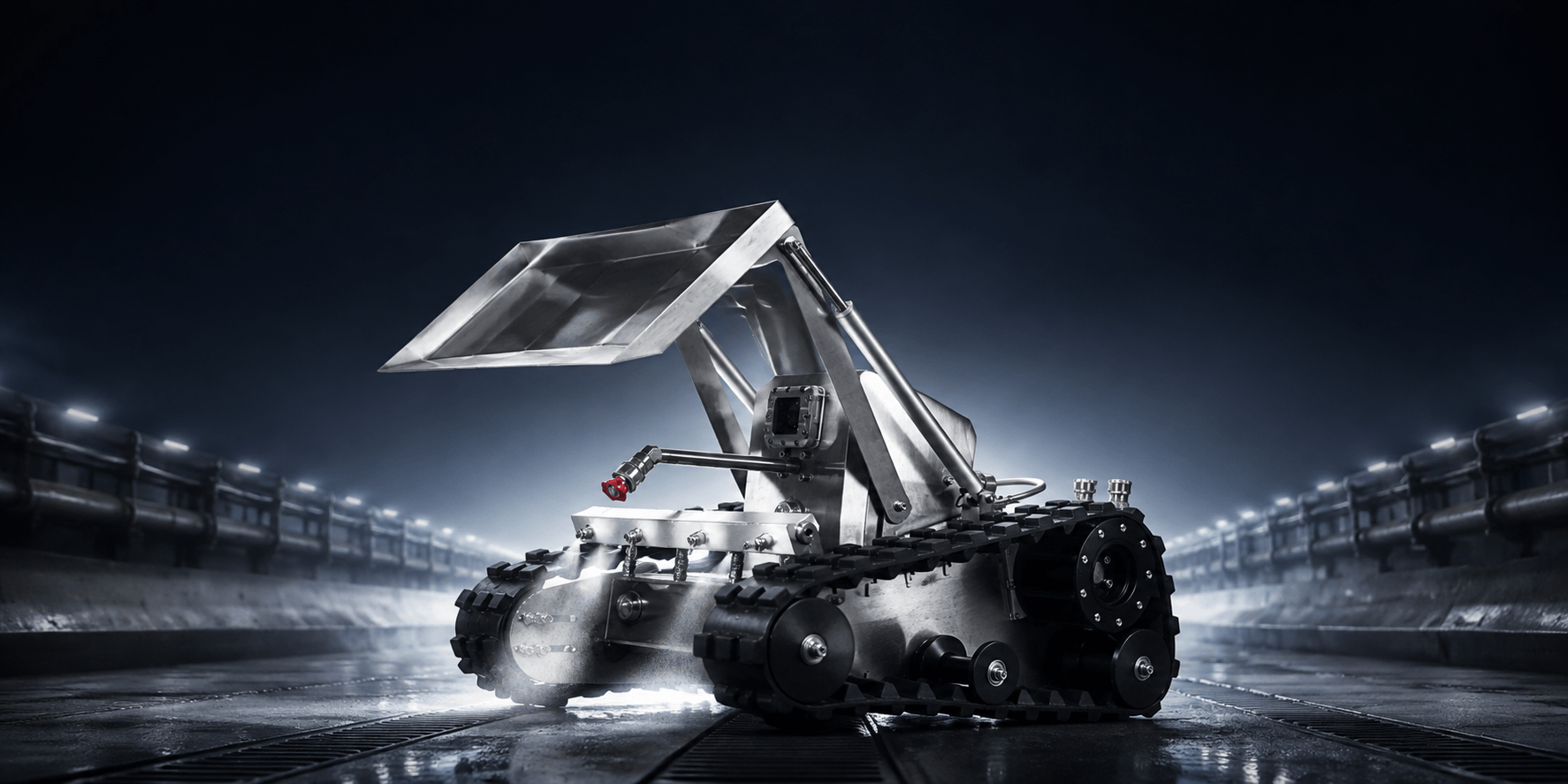
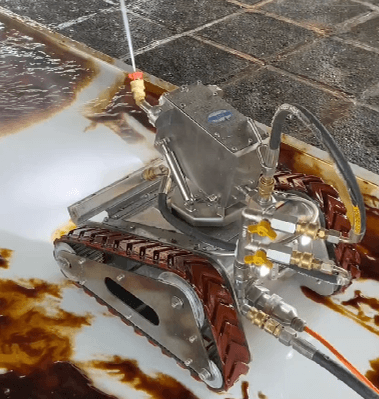
Clean Your Tanks Remotely.
No Entry Required.
Tell us about your tanks — size, contents and access — and we'll recommend the right S6 setup for your operation.
S6 is built for non-flammable, non-explosive tank environments. Always confirm material and safety conditions with our engineers.