The question every crude oil storage tank operator asks is simple: how do you clean a tank when sending people inside is the riskiest option? In suitable applications, the answer is a remote-controlled tank cleaning robot. It keeps operators outside the vessel, reduces the need for confined-space entry, and still gives you visual evidence and a cleaning report for the next step.
Why confined-space entry is the main risk
Inside a crude oil storage tank, the floor sludge is not just water and dirt. Residual hydrocarbons stay in the sludge, on the walls and in low points. When cleaning starts, that deposit is disturbed and vapors can be released. A worker inside can face oxygen deficiency, toxic exposure, flammable atmosphere, or a restricted exit route. Confined-space entry rules exist for those reasons.
Most tank cleaning jobs begin with a permit to work, isolation, gas freeing and a plan for the waste stream. Hot work around storage tanks is controlled because residual vapors are not predictable. So the fewer people who have to enter the vessel, the shorter the exposure and the smaller the risk. Crude oil tank sludge removal is often the real driver of the job; the safer method keeps operators out while the cleaning is happening.
What remote-controlled cleaning changes on site
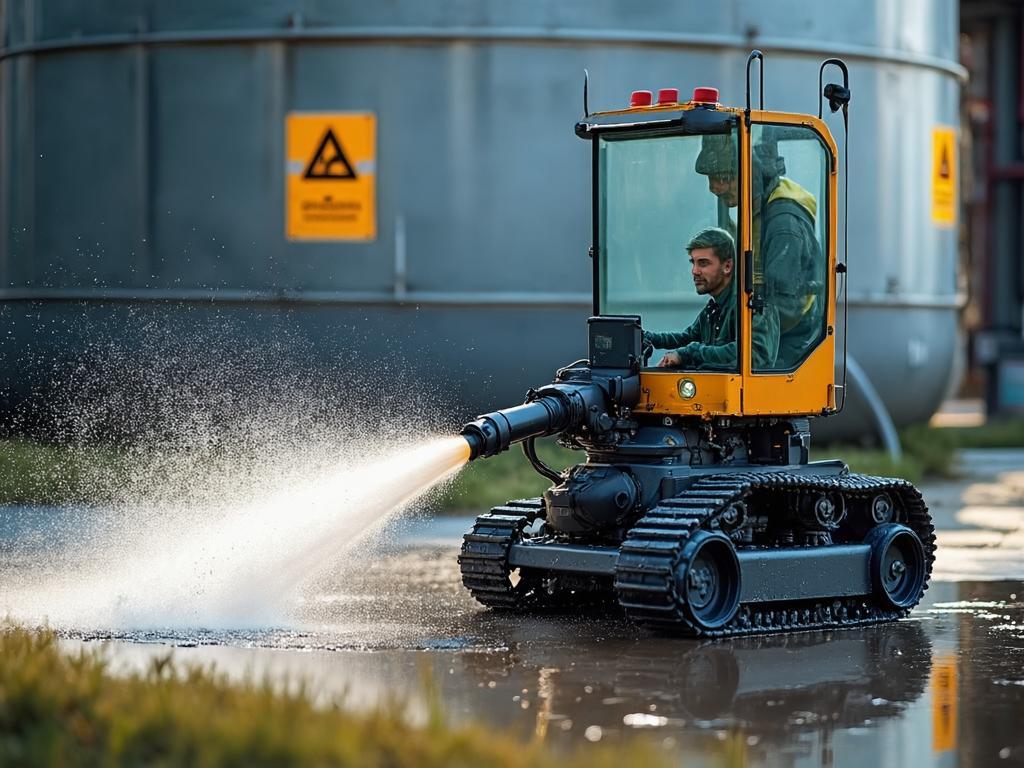
Remote-controlled cleaning shifts the operator’s position from inside the tank to outside the access opening. TankSolv’s S6 is a tracked tank cleaning robot built around that idea. You deploy the S6 into the vessel while the crew monitors the feed from three HD cameras. The unit works with high-pressure jetting up to 200 bar, a 360° rotating nozzle with 45° up/down lifting, and a maximum jetting range of 7 m. Its tracked chassis provides 30° gradeability, and the 60 m cable lets the operator stay at a distance while the robot moves across the floor.
For oil tank cleaning teams, this changes the sequence to deploy, clean, verify, report. The three HD cameras plus 4 × 3W LEDs let you see the tank floor and walls live, so you can adjust the nozzle angle without sending someone in for a visual check. That supports your field inspection and gives you recorded observations for a cleaning report. Fewer entries during the cleaning phase also means fewer permit entries to manage.
Where the limits sit
Remote cleaning does not mean every tank can be cleaned without entry. The S6 is verified for non-flammable and non-explosive materials. That is an important limit. If the tank contains volatile fuels, a flammable atmosphere, or explosive potential, a standard remote robot setup must not be assumed to be acceptable. Hazardous petroleum environments require a separate engineering and certification review before any equipment enters the vessel.
High-pressure jetting can clean and loosen sludge, but the S6 does not have integrated sludge suction. The slurry still has to be removed through external suction or pumping, and that arrangement depends on engineering confirmation. Vapor management and waste disposal stay part of the job. A remote-controlled cleaning robot can reduce the need for confined-space entry in suitable applications, but it does not replace the confinement controls by itself. You still need the permit system, gas monitoring and isolation steps.
FAQ
How often should fuel tanks be cleaned?
There is no single interval. The schedule depends on tank service, fuel quality, inspection findings and the maintenance program’s inspection window. Operators usually check bottom sludge and water draw-off; when they affect capacity or inspection readiness, cleaning is due.
Can the robot handle sludge?
High-pressure jetting can loosen and clean sludge from the tank floor and walls. The S6 does not include sludge suction, so use external suction or pumping after engineering confirmation. Waste disposal requirements still apply.
Before you plan the next turnaround, talk to TankSolv engineers about a site-specific setup for your crude or fuel storage tank. They can help you review the material, access, and reporting requirements.