

The Real Risk Inside a Tank
A tank that has held chemicals, crude or sludge is a confined space by definition. The atmosphere can be oxygen-deficient, flammable or toxic — and it can change while work is underway.
Every entry means permits, gas testing, a standby team and rescue planning. It is a heavy process, and it exists because the consequences of getting it wrong are severe.
Removing the Person from the Atmosphere
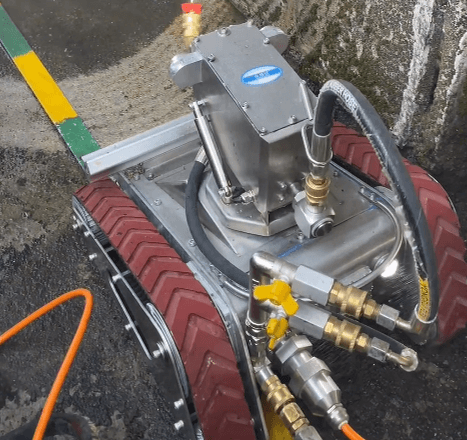
A cleaning robot removes the need to send anyone inside. The crew works from outside the tank, at a safe distance, watching the same surface on camera that a confined-space worker would see by torchlight.
That one change eliminates the largest portion of the risk in a cleaning job: human exposure to the tank atmosphere.
Faster, and Safer at the Same Time
Less risk usually means more process. No gas-freeing wait, no scaffolding build, no crew rotation — the robot starts cleaning as soon as it is lowered in.
Jobs that took days under confined-space rules are measured in hours. Safety and speed do not have to be traded against each other.
No-entry cleaning does not just make tanks cleaner — it makes the work safer for the people who used to do it from the inside.